
How to Choose the Right PA
Choosing the right PA setup can make the difference between clear, confident communication and guests struggling to hear important announcements. Whether you’re organising a horse event, agricultural show, sports day, car rally, gala or community event, reliable sound is essential for both audience experience and safety.
In this guide, we explain how to plan, outline the key factors to consider, identify common mistakes to avoid, and discuss why hiring a professional is often the most dependable solution for outdoor and large-scale occasions.

Why Clear Sound Matters for Public safety & compliance
A well-designed setup does more than amplify sound. It allows organisers to:
- Deliver clear instructions and commentary
- Manage crowds safely
- Make emergency announcements effectively
- Enhance the overall professionalism.
At outdoor meetings, especially, sound must travel over distance, compete with environmental noise, and remain intelligible in changing weather conditions. This is why a “one size fits all” approach rarely works.
Step 1 – Understand Your Size and Layout of the Function
The first consideration is audience size and site layout.
Small Events (up to 200 people)
- Village fetes
- School sports days
- Small presentations
These may only require a compact speaker setup and a handheld microphone, but careful placement is still important to avoid dead spots.
Medium Events (200–800 people)
- Agricultural shows
- Local horse Show
- Community galas
These typically require multiple speakers, elevated mounting, and a central control point to balance coverage across a wider area.
Large events (800+ people)
- Point-to-points
- Motorsport rallies
- Large outdoor competitions
At this level, arena coverage, directional speakers, commentary positions and backup planning become essential.
Step 2 – Indoor vs Outdoor Events Requirements
Sound behaves very differently indoors compared to open environments.
Outdoor challenges
- Wind disperses speech
- No reflective surfaces to carry sound
- Exposure to weather
- Larger coverage areas
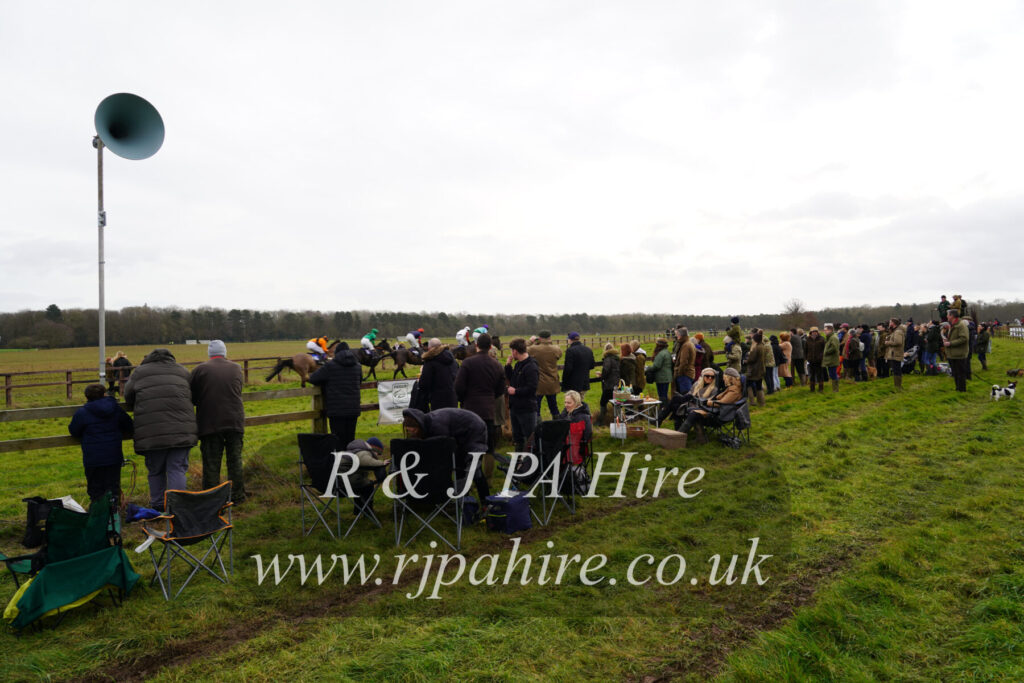
This is why many outdoor events use horn speakers, which project audio directionally over long distances while maintaining clarity. Professional equipment is also designed to cope with open conditions.
Step 3 – Microphone Selection
Handheld microphones
Best suited for:
- Live commentary
- Public announcements
- MC duties
They offer strong vocal clarity and reliability in noisy environments.
Headset or lapel microphones
Useful for:
- Presentations
- Demonstrations
- Hands-free speaking
These require careful setup outdoors due to wind sensitivity and positioning.
Step 4 – Speaker Positioning and Coverage
Poor placement is one of the most common causes of sound problems.
Key principles
- Elevate speakers where possible
- Slightly overlap coverage zones
- Aim speakers towards audiences, not open ground
- Use zoning or delay for long arenas or tracks
This is why experienced providers often carry out site assessments before installation.
Step 5 – Power and Reliability Planning
Reliable power is critical.
Key considerations
- Mains supply vs generators
- Load calculations
- Weatherproof cabling
Professional setups often include backup power options, spare microphones and redundant components to ensure continuity if something unexpected happens.
Step 6 – Communication Beyond Announcements
Large functions rely on more than public announcements alone.
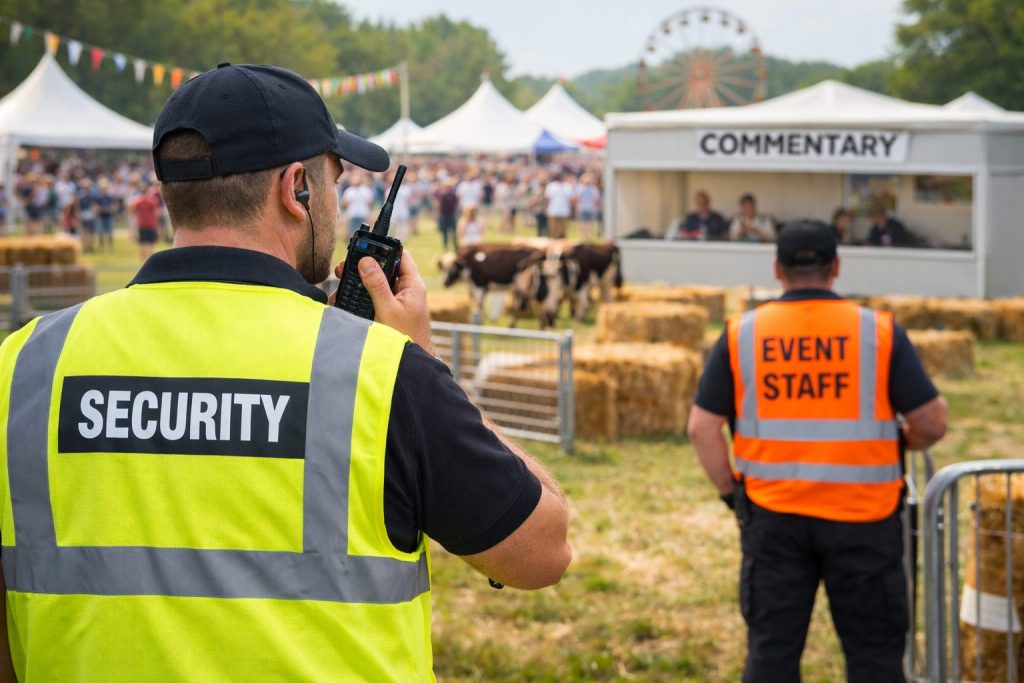
Two-way radios
Radios allow:
- Stewards to coordinate
- Safety teams to respond quickly
- Organisers to manage multiple zones
Step 7 – Safety, Crowd Management and Martyn’s Law
Clear audio is essential during:
- Weather delays
- Lost child announcements
- Emergency situations
With the introduction of Martyn’s Law (Terrorism (Protection of Premises) Act 2025), organisers are increasingly expected to demonstrate preparedness. Effective site-wide communication plays a key role in meeting these expectations.
Do You Need a Commentary Unit?
Many outdoor sporting events benefit from a dedicated commentary unit or commentary box.
These units provide a professional space for commentators and announcers and act as the central control point for the event PA system.
Events that commonly use commentary units include:
- Horse racing and point-to-point meetings
- Motorsport rally stages
- Agricultural show arenas
- Outdoor sports competitions
👉 See our Commentary Unit Hire page
Common Mistakes to Avoid
Common issues include:
- Hiring systems that are too small
- Using indoor equipment outdoors
- Underestimating wind and background noise
- Relying on untrained volunteers
- Forgetting backup planning
These problems are easily avoided with experienced technical support.
Why Professional Hire Makes Sense
Working with a specialist provider gives you:
- Correct system design
- Site-specific setup
- Experienced technicians
- Fully tested equipment
- Peace of mind on event day
This allows organisers to focus on running the function, not managing technical issues.
Frequently Asked Questions
What size PA system do I need for an outdoor event?
This depends on the site size, audience numbers and layout. Large showgrounds often require distributed speaker systems.
Do outdoor events need commentary systems?
Many sporting events use commentary units so announcers can provide updates and results.
Can PA systems run from generators?
Yes, professional event sound systems can be powered using silent generators or battery systems when mains electricity is unavailable.
PA Hire Across Yorkshire
R & J PA Hire supplies event sound systems across:
Hull
Beverley
Driffield
Scarborough
Bridlington
York
Malton
Harrogate

Real Event Example
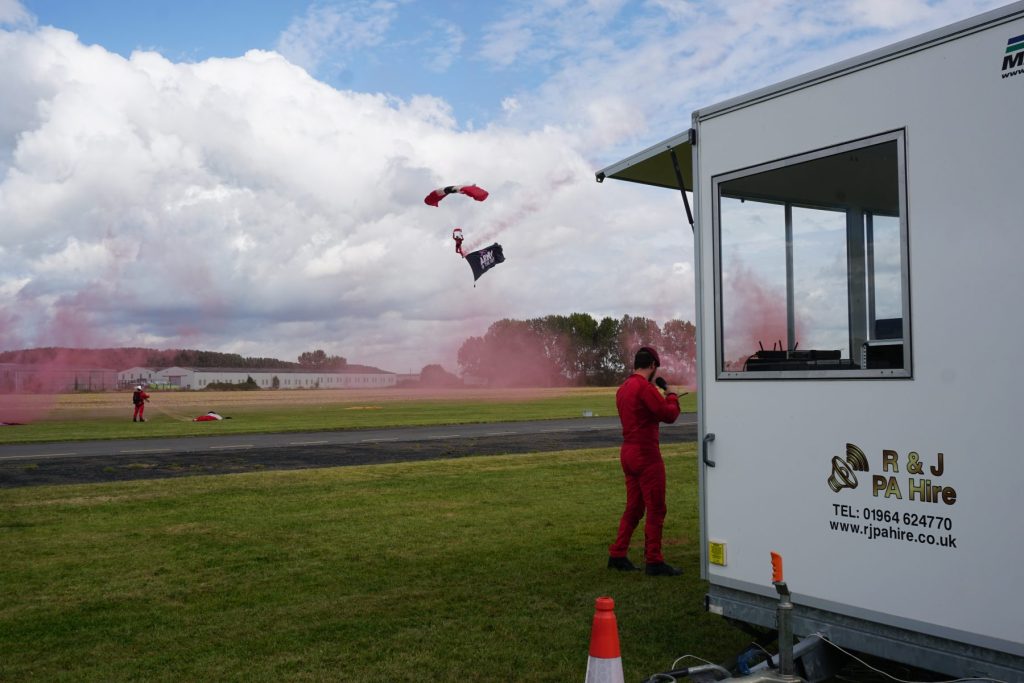
Example: Rally Stage PA System – Beverley Westwood
R & J PA Hire supplied a distributed PA system and commentary unit for the East Riding Stages Rally at Beverley Westwood, allowing spectators across the stage to hear live rally commentary and safety announcements.
How We Can Support Your Event
At R & J, we provide:
- Outdoor solutions
- Mobile commentary units (single & double deck)
- Arena and track coverage
- Wireless microphones
- Two-way radio communications
- On-site technical support
We work with organisers across Yorkshire and surrounding regions, supporting functions of all sizes.
Need a professional PA hire for your upcoming event in Yorkshire?
From clear announcements to full arena coverage, we provide reliable PA systems, commentary units, and event communications. Request a free quote or call us on 01964 624770 or 07889 438187 for friendly, expert advice.